
 admin
admin
Table of Contents
1. Data-driven guide to the best caravan extension tent for families
2. Assessing family needs for space and layout
3. Setup, weatherproofing, and materials
4. caravan extension tent FAQ
5. Conclusion: choosing the right caravan extension tent for your family
Data-driven guide to the best caravan extension tent for families

Choosing a caravan extension tent adds living space and storage without moving to a bigger unit. A well-designed extension keeps cooking, meals, and downtime organized yet connected to the caravan. This guide examines practical layouts, weather considerations, and selection criteria families use to compare caravan annex tents, caravan porch tents, and awning extensions. Understanding how families actually use space on the road helps you pick a model that fits kids, gear, and weekend trips.
Balance capacity, weatherproofing, and setup efficiency with real-world family routines. Start by listing who sleeps where, what meals happen outside, and how much gear must stay accessible. This data-driven approach helps you compare components such as caravan annex tents, caravan porch tents, and weatherproof caravan extension tents with features like privacy rooms. Assessing family needs for space and layout will guide you toward a caravan extension tent that fits your caravan, budget, weekend rhythms, and how to set up a caravan extension tent.
Why families benefit from a caravan extension tent
Adds living space without renting bigger units
Gives room for meals, lounging, and routines.
Creates separate zones for cooking, sleeping, and play
Creates zones for cooking, sleeping, and play.
Defining terms: caravan annex tent, caravan porch tent and more
caravan annex tent: extra room attached to the caravan
Annex adds living space attached to the caravan.
caravan porch tent vs awning extension: use cases and weather protection
Porch tents shield the doorway; awning extensions cover more.
Assessing family needs for space and layout
Planning a caravan extension tent starts with a practical assessment of how your family uses on-site space. Size, privacy, and layout all influence comfort during family camping trips. By estimating footprint, allocating living and circulation space, and choosing among annex, porch, or awning styles, you can pick a setup that stays comfortable in all conditions.
Sizing your living space extension
Estimate floor area
For a family of four, target roughly 12-15 m2 of usable space (about 130-160 ft2). This allows a combined living and dining area plus a play or seating zone while leaving room for movement. If you know your caravan width (usually 2.2–2.5 m), plan an extension length of 3–5 m to avoid crowding.
Furniture and movement space
Allocate 0.8–1.0 m of clear width for aisles and around furniture. A compact sofa, a fold-out dining table, and a couple of chairs should fit with enough clearance to pass by. Dimensional planning reduces the chance you’re stepping over blankets or tripping over cords.
Floor plan tips
Position the sleeping or privacy zones toward the outer edges and reserve a central living area. A dedicated dining corner or small lounge boosts daily comfort without overextending the footprint. When you know the layout, you can tailor a caravan living space extension to your family’s habits.
Privacy options: privacy room and sleeping zones
Dedicated privacy room
Look for a tent for caravan extension that includes a privacy room or a zip-in bedroom panel. A 2.0–2.6 m long privacy compartment provides changing space or a quiet sleeping nook for kids, enhancing mornings and evenings away from the main living area.
Separate sleeping zones
Use lightweight dividers or breathable curtains to create distinct sleeping zones for adults and children. This keeps noise and light more contained and helps with temperature control across zones.
Ventilation and doorway options
Dual-entry designs with mesh doors improve cross-ventilation. Ensure at least one doorway has a weatherproof zip and an inner door panel to minimize drafts while keeping airflow steady in warm weather.
Layout configurations: annex vs porch vs awning extensions
Annex tents can function as a tent for caravan extension with extra room
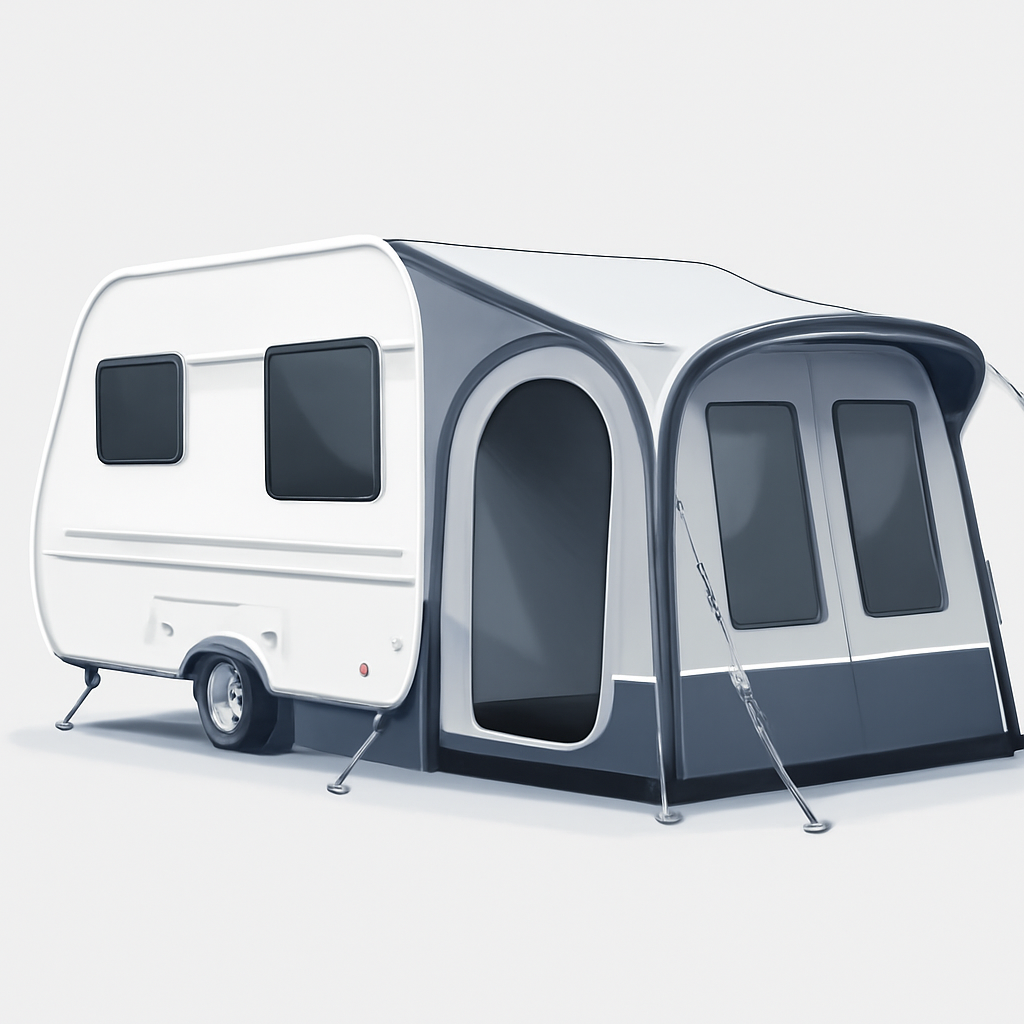
An annex adds a flexible, enclosed area that can serve as an extra lounge, dining space, or sleeping annex. It’s often the best option when you want a substantial, private area separated from the main caravan.
Porch tents offer weather protection and easy access to the caravan
Porch extensions provide robust weather protection at the entry, plus direct access to the caravan interior. They excel in muddy or rainy conditions and can double as a cooking or gear zone.
Awning extensions are lighter and quick to deploy
Awning extensions are ideal for weekend trips where rapid setup matters. They are lighter and easier to transport, though they typically offer less internal headroom and storage than annex or porch configurations.
Quick deployment tips
Choose models with pre-attached poles, integrated pegs, and clear height for standing comfort. Practice setup at home, use ground sheets to minimize damp, and seal seams to keep weather out.
| Configuration | Best Use | Pros | Considerations |
|---|---|---|---|
| Annex | Extra room for living or sleeping | More space and privacy | Heavier, longer setup |
| Porch | Weather protection, easy access | Strong entry protection | Less interior height |
| Awning | Lightweight, fast deployment | Quick setup, portable | Smaller interior area |
That groundwork paves the way for setup, weatherproofing, and materials selection to ensure a dependable caravan extension tent.
Setup, weatherproofing, and materials

A caravan extension tent adds valuable living space without sacrificing mobility. For family trips or weekend escapes, the right setup, robust weatherproofing, and lightweight design let you extend your caravan living space extension with ease. This section covers practical steps to ensure a safe, comfortable, and compact solution—whether you’re handling a caravan annex tent or a caravan porch tent.
How to set up a caravan extension tent safely
Check caravan attachment compatibility and kit contents
- Confirm your caravan model accepts a caravan extension tent via the standard awning rail or roll-out channel. Verify height, rail type, and any vertical clearance required for the extension.
- Inspect the kit contents: telescopic or sectional poles, storm pegs, guylines, an all-weather groundsheet, adaptors, and a carry bag. If you’re missing items, order replacements before your trip.
Anchor with pegs and stabilizers to windy sites
- Use heavy-duty steel pegs or anchors in all ground types, plus stabilizers or guy lines at 45 degrees to resist gusts.
- In exposed or windy sites, set guylines at multiple points and keep doors outward-facing to reduce wind loading on the entrance.
- Check tension after setup and adjust as the tent settles; avoid over-tightening to prevent fabric distortion.
Quick setup checklist
- Lay out the extension flat and align with the caravan’s door line.
- Attach to the rail, raise the frame, and insert poles in sequence.
- Stake corners first, then add guylines, checking for a taut, uniform shape.
- Close doors and ventilate to prevent heat buildup when not in use.
Weatherproofing: materials, seams, and ventilation
Look for taped seams and waterproof ratings
- Seek reinforced, taped seams to minimize leaks at joints. A reasonable benchmark is a hydrostatic head rating of 1500–3000 mm for light to moderate rain; 3000–5000 mm is preferable for heavier downpours.
- Choose a tent with a durable rain fly and a groundsheet that overlaps the tent base to block water ingress.
Breathable fabrics reduce condensation
- Favor fabrics with a polyurethane or silicone coating combined with a breathable membrane. Breathability lowers interior condensation without compromising water protection.
- For comfort, target a fabric with a high MVTR (moisture vapor transmission rate) while keeping wind resistance in mind.
Ventilation strategy
- Include adjustable roof vents and mesh panels in doors to promote airflow. In models with a privacy room, ensure there’s a separate vented partition to prevent stale air buildup.
Choosing lightweight options for weekend trips
Compact poles (aluminum)
- Aluminum poles reduce weight and bulk without sacrificing strength. Look for anodized finishes and multi-section poles that pack compactly.
Packable fabrics and integrated storage
- Opt for lightweight polyester or polycotton blends with a small footprint when packed. Integrated carry bags and compression straps make campsite setup and breakdown faster.
Weight limits for car boot and easy transport
- Lightweight caravan extension tents for weekend trips typically total 8–15 kg (tent plus accessories). Plan around your vehicle’s boot capacity and consider a model with a dedicated storage bag to simplify loading.
Caravan extension tent with privacy room
- If you’re camping with family, a model that includes a privacy room can help separate sleeping space from living/dining areas, improving comfort and organization on short trips.
caravan extension tent FAQ
A caravan extension tent opens valuable living space and adds flexibility to family trips. Consider options from caravan annex tents to caravan porch tents that pair with a caravan awning extension. For families, the best choice balances enclosure, privacy, and weatherproof performance. Below are practical answers to common questions, with actionable checks you can apply when shopping or on-site.
What is the best caravan extension tent for family camping?
Size and layout
- Look for a size that fits your family plus a privacy room or separate sleeping area.
Build quality and warranty
- Check build quality, materials, and warranty.
Inclusions
- Ensure it includes a compatible attachment kit and groundsheet.
How to set up a caravan extension tent?
Step-by-step guide
- Follow the manufacturer’s setup guide step by step.
Practice
- Practice at home to reduce on-site setup time.
Stability
- Secure anchors and use guy lines in windy conditions.
What features define a weatherproof caravan extension tent with room?
Seams and waterproof rating
- Fully taped seams and a high hydrostatic head rating.
Breathability
- Breathable fabric to minimize condensation.
Structure and pegs
- Solid poles and robust pegs for stability.
choosing the right caravan extension tent for your family
Expanding your caravan’s living space with a well-chosen caravan extension tent can redefine family camping. Start by matching your caravan footprint and awning height to options such as a caravan annex tent or a caravan porch tent. The ideal model balances usable space with manageable weight and a realistic budget. For families, a weatherproof caravan extension tent with room—and options for a privacy room—delivers separation between sleeping and living zones, while still packing down for weekends away. The market spans from lightweight, quick-setup designs for weekend trips to durable, multi-season setups that handle variable weather and gear loads.
Key takeaways for families
Balance space, weight, and budget to maximize living space extension
- For four to six people, target a width around 2.3–2.5 m and a depth of 2.2–2.6 m. This size creates a comfortable living area without overburdening the tow vehicle or storage.
- Weigh trade-offs between fabric and frame: lightweight polyester with robust poles speeds setup, while thicker fabrics offer better weather resistance but add weight.
- Set a practical budget range: entry-level models can start around a few hundred pounds, with higher-end options featuring integrated privacy rooms and enhanced weatherproofing pushing toward premium tiers. Ensure the chosen tent complements your caravan’s existing setup without sacrificing other essentials.
Prioritize privacy room options and easy setup
- A caravan extension tent with a privacy room offers a dedicated space for changing, naps, or kids to retreat—great for family routines on multi-day trips.
- Seek features that speed setup and breakdown: color-coded or labeled poles, pre-attached guy lines, hub-style frames, and clear seam-sealing indicators.
- Consider groundsheet compatibility and door configurations that keep dirt outside and living areas tidy, especially when you’re rotating activities between cooking, relaxing, and playing.
Quick feature snapshot
| Aspect | Guidance | Why it matters |
|---|---|---|
| Space and weight | Aim for 2.3–2.5 m width; keep total weight manageable for your vehicle | Ensures comfortable living space without compromising tow stability |
| Privacy room | Look for a separate inner room with a zip or curtain | Flexible spaces for kids, guests, or gear without crowding main area |
| Setup ease | Favor color-coded poles, quick-clip frames, and clear setup steps | Reduces time to pitch and increases family readiness for weekend trips |
| Weather resistance | Prioritize weatherproof fabrics and robust seams | Keeps interiors dry and usable in varying conditions |
Next steps: buying, testing, and setting up
Read user reviews focusing on weather performance and durability
- Look for repeated notes about rain leaks, seam sealing, zipper durability, and wind stability.
- Evaluate claims around weatherproof caravan extension tent with room and the overall build quality across seasons.
- Compare options labeled as the best caravan extension tent for family camping to see how real families rate comfort, space, and ease of use.
Try setup at home with family to ensure smooth weekend trips
- Do a full driveway setup with the family, aiming for a 30–60 minute pitch to build familiarity.
- Check door height, internal clearance, and the privacy room’s accessibility.
- Test weatherproofing basics with a tarp-based shield and practice packing down to simulate real weekend routines.